
Quick Answer: How do you teach children to use AI responsibly? Build a repeatable habit, not a list of rules. The sequence that works is: think first, use AI with a clear purpose, check what it produces against what you expected, and take ownership of the result. Children who practice this sequence with real feedback build responsible AI habits that last.
Every project a student builds in my classes goes through the same check before it leaves the session. Does this match what I expected when I started? Would I be comfortable explaining exactly how I got this result? Is there anything here that looks accurate but might not be? Did I make the real decisions, or did the tool make them for me?
That short list of questions is how I teach children to use AI responsibly. It is not a lecture about safety, and it is not a set of rules pinned to a wall. It is a habit a child runs every single time, until it stops being a checklist and becomes the way they think.
Most advice on this topic stops at telling parents what to forbid. That misses the point. A child who only knows what not to do has no method for the situations nobody thought to warn them about. A child who has practiced a real check has something they can apply anywhere.
What Does It Actually Mean to Teach Children to Use AI Responsibly?
Responsible AI use is not a personality trait some children have and others don’t. It is a sequence, and it can be taught the same way any other habit is taught: through repetition, feedback, and enough practice that it becomes automatic.
The sequence has four parts. Think first, before opening any AI tool. Use AI with a clear, stated purpose, not just to see what happens. Check what comes back against what you expected. Take ownership of the result, meaning you can explain and stand behind it.
Rules alone cannot cover this. A rule says don’t do X. A habit gives a child a process to run when they encounter a situation nobody listed. That is the actual gap between the articles telling parents to set boundaries and a method that works when the parent isn’t in the room.
How Do You Teach the Think First Habit?
Before a child opens any AI tool, they should be able to say what they are trying to do and what they already think the answer or approach might be. This single step prevents the most common failure I see.
In beginner classes, I hand out ready-made prompts before students learn to write their own. Some students copy the prompt in without reading it, then have no idea what to do with the result, because they never knew what they were expecting in the first place. I’ve written about that pattern in more detail in will AI make kids lazy, and it is the clearest evidence I have that skipping this one step is where most of the trouble starts.
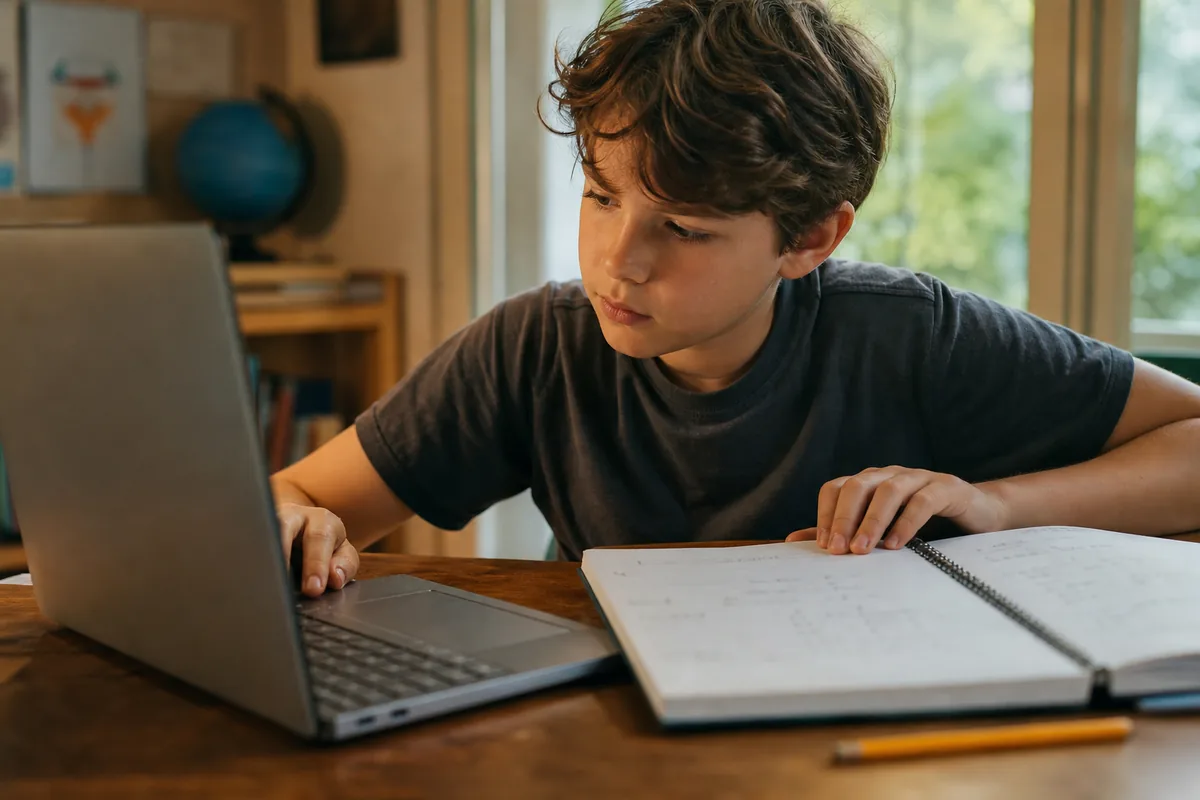
At home, this looks like a single question asked before the screen ever opens: what do you think you’ll get, and why do you want it?
How Do You Teach Children to Use AI Responsibly When They Already Have a Favorite Tool?
Most children arrive with a tool they already prefer, usually ChatGPT or an image generator. That is fine. The check does not change based on the platform. Whether a child is writing with AI, generating images, or building something else entirely, the same four questions apply every time.
Meeting a child where they already are, rather than insisting on a different tool, makes the habit easier to build. The habit is what matters, not the brand of software it gets applied to.
How Do You Teach Children to Check What AI Produces?
This is the step most often skipped entirely, and it is where real harm happens. In is ChatGPT safe for kids, I described a teenager whose classmates were using AI to create fake images of relationships that did not exist. That is exactly what happens when nobody ever taught a child to ask whether what they are making is honest, accurate, or something they would stand behind.
The check itself is simple enough to teach a young child. Does this look right? Is there anything here I should double check somewhere else? Would I be comfortable if someone asked how I made this? A child who runs through those questions, even quickly, catches most of what unsupervised AI use misses.
This is not a one-time lesson. It is a habit built through repetition, ideally with an adult present the first several dozen times, until the child runs the check on their own without being asked.
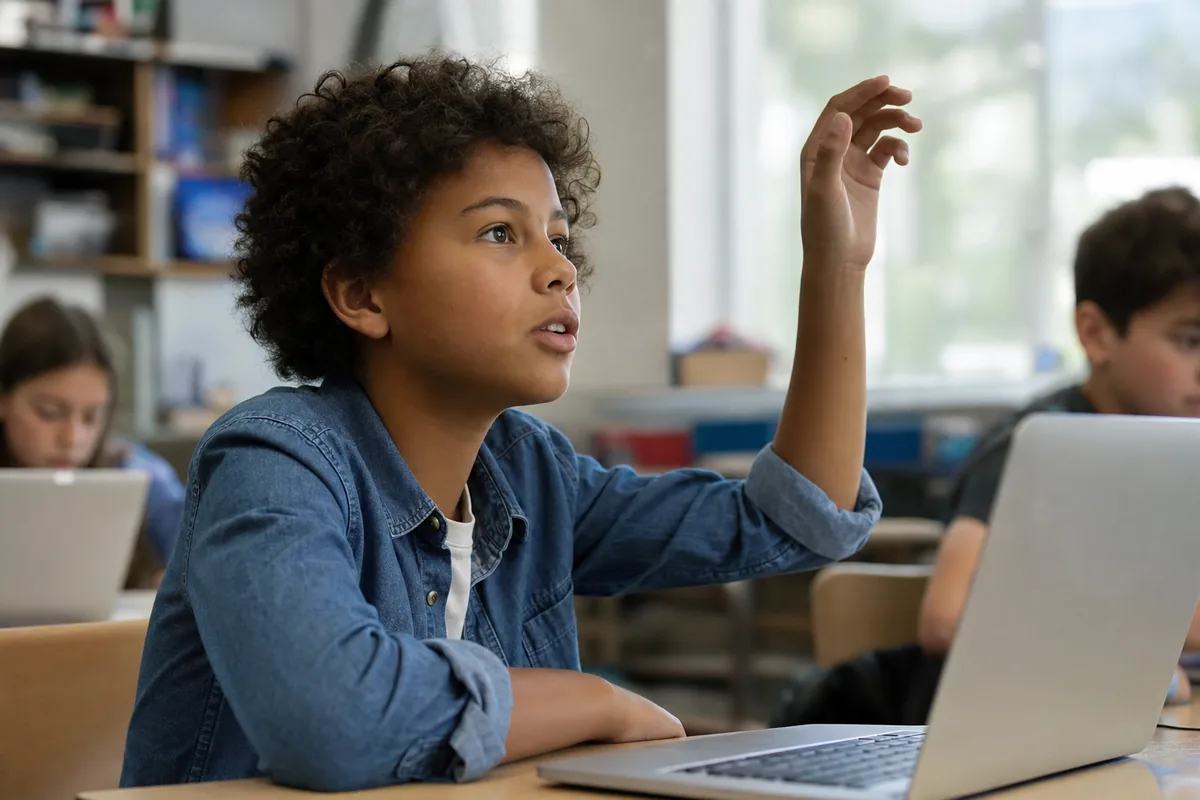
What Does Taking Ownership of AI Output Look Like for a Child?
The final step is the one that separates a tool that extends a child’s thinking from a tool that replaces it. A child should be able to explain, defend, and stand behind anything they submit or share, whether AI helped make it or not.
If a child cannot explain how they got a result, they do not actually own it. That is true whether the result is a piece of homework, an image, or a project built for a class. Ownership is not about who typed the prompt. It is about whether the child understands and can account for what came out the other end.
This is the standard I hold every project to before it leaves a session. Not whether AI was involved, but whether the child can talk through it like it is genuinely theirs.
What Framework Helps You Teach Children to Use AI Responsibly at Home?
A parent does not need a classroom to apply this. Four questions, asked consistently, do most of the work.
Before they start: What are you trying to do, and what do you think you’ll get?
While they work: Are you using this tool for the reason you stated, or has the purpose drifted?
After the output appears: Does this match what you expected? Is there anything here that looks off?
Before they share or submit anything: Can you explain exactly how you got this, and are you comfortable standing behind it?
None of this requires technical knowledge. It requires consistency. A parent who asks these questions regularly, even briefly, builds the same habit a structured classroom builds through repeated practice with real feedback.
For families who want that repetition and feedback built into a live, small-group setting rather than managed alone at home, AI education for kids covers what structured programmes look like in full, for children ages 8 to 16 in Canada, the United States, the United Kingdom, and beyond.
Frequently Asked Questions
What is the single most important habit to teach a child about AI? Thinking first. A child who states what they are trying to do and what they expect before opening an AI tool avoids most of the problems that come from unsupervised use. Everything else in a responsible AI framework builds on that first step.
How young can a child start learning to use AI responsibly? As young as 8, when the check is kept simple. A young child can learn to ask “does this look right?” and “would I be comfortable explaining this?” even before they fully understand how the technology works underneath.
What if my child is already using AI without any of this structure? Start now. The habit can be introduced at any age. Begin by asking your child to explain the last thing they made with AI, and work backward from there to introduce the check questions.
Is teaching responsible AI use the same as teaching internet safety? Related, but not identical. Internet safety is largely about avoiding harm from others. Teaching children to use AI responsibly is also about their own judgment: whether they think before acting, check what they produce, and take ownership of it.
Do structured AI programmes actually teach this, or is it assumed? At Transcend AI Academy, it is explicit. Every project goes through a responsible AI check before it leaves the session, with a live instructor reinforcing the habit in real time, for children in Canada, the United States, the United Kingdom, and beyond.
How do I know if my child has actually built this habit, or is just following instructions? Ask them to run the check on something without prompting. A child who has built the habit will ask the questions unprompted. A child who is still following instructions will need to be reminded. That difference is the whole goal.
Ready to Build These Habits With Real Feedback?
The Transcend AI Fall Term is open for enrollment now. It starts September 19 and runs ten Saturdays through November 21, with one live two-hour class each week from 12pm to 2pm ET. Every session builds the responsible AI check into real project work, for ages 8 to 17 across two age-aware tracks, capped at eight students per group.