
Artificial intelligence is no longer a future concept. It is already shaping how children learn, create, and solve problems. For parents, this raises important questions:
- What exactly is AI education for kids?
- Is it safe?
- What age should children start learning AI?
- And how can parents in Canada ensure their children aren’t left behind?
This guide answers those questions clearly and practically.
After teaching over 9,000 children technology skills over the past decade, I’ve seen firsthand how early, age-appropriate AI education can shape confidence, creativity, and long-term opportunity. I’ve also seen what happens when children are introduced too late—or in the wrong way.
This page is designed to help parents make informed decisions about AI education for kids, especially in a Canadian and online learning context.
What Is AI Education for Kids?
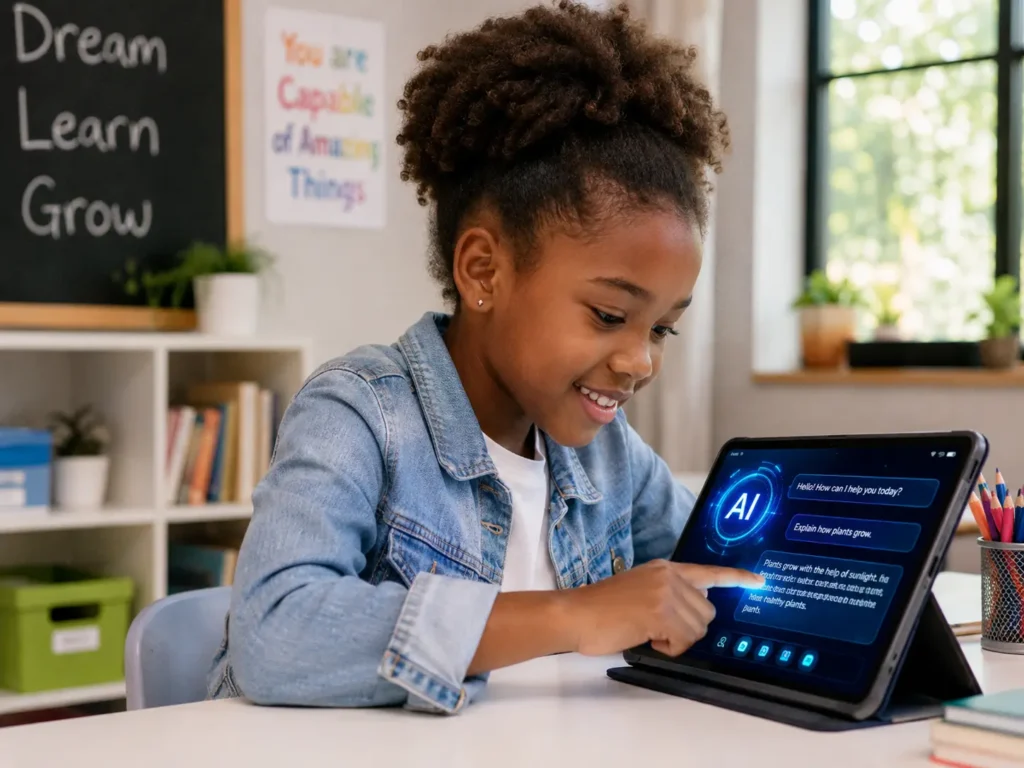
AI education for kids teaches children how to understand, use, and collaborate with artificial intelligence tools in creative, ethical, and critical ways.
At its best, AI education helps children ask better questions, think critically about AI-generated outputs, use AI as a creative and learning partner, and understand the limits, risks, and responsibilities that come with powerful technology. The goal is children who think independently and create with intention.
For a deeper look at what this actually involves in practice, the article on what AI education for children really means covers this in detail.
Why AI Education for Kids Matters in 2026
Parents often ask, “Can’t my child just learn this later?”
The honest answer: waiting creates a growing disadvantage.
The Skills Gap Is Already Forming
Children entering the workforce in the 2030s will work alongside AI systems in almost every profession. AI will not replace human thinking—but it will amplify those who know how to collaborate with it.
Students who understand both traditional subjects and AI tools will learn faster, create more sophisticated work, and adapt more readily to new technologies. The U.S. Department of Education’s report on Artificial Intelligence and the Future of Teaching and Learning makes a similar point: AI works best in education when it supports human judgment rather than replacing it. Those without AI literacy will struggle to compete, even if they are otherwise capable students.
From Digital Natives to AI-Literate Thinkers
Today’s children already interact with AI daily. Search engines, recommendation algorithms, chat-based assistants, and AI-generated media are part of the platforms they use without most of them realising it.
The real question is not whether they will use AI, but how they will use it.
AI education shifts a child’s relationship with these tools from passive reception to active direction. The goal is a child who asks better questions, evaluates what comes back, and uses AI to extend their own thinking.
AI Education for Kids in Canada: What Parents Should Know
Canada has strong education systems, but AI education is inconsistent across provinces and school boards.
The Reality in Canadian Schools
In many Canadian classrooms, AI tools are restricted or banned outright, teachers receive little formal AI training, and curricula struggle to keep pace with rapid changes in the technology.
This creates uneven exposure. Some children gain early AI literacy, while others are shielded from it entirely.
Why Online AI Education Fills the Gap
FFor many Canadian families, especially immigrant and globally minded parents, online AI education offers access to up-to-date AI tools, smaller class sizes, specialised instructors, and international perspectives. Families in Toronto, Vancouver, Calgary, or smaller cities can access the same quality of AI education without geographic limits.
Age-Appropriate AI Education for Kids
One of the biggest mistakes parents make is assuming AI education is the same at every age. It isn’t.
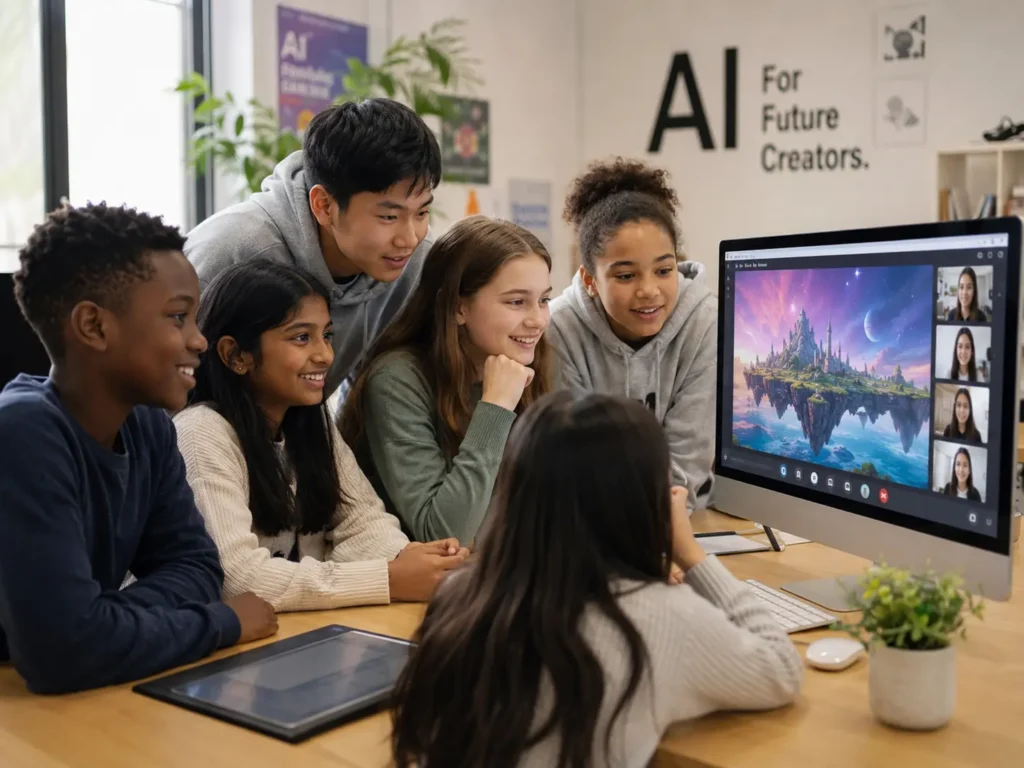
Ages 6–8 — AI Exploration Through Play
At this stage, AI education focuses on curiosity, language development, and creative expression. Children learn how descriptions affect AI-generated images, how AI can help them tell stories, and the basics of safe and responsible use. The goal is confidence, not complexity.
Ages 9–12 — AI Creation and Critical Thinking
Children at this stage develop prompting skills, research and verification habits, ethical awareness, and the ability to complete multi-step creative projects. AI becomes a genuine tool for thinking.
For a practical look at what this development looks like and how parents can recognise it, the article on what AI fluency means for children covers this in detail.
Ages 13–16 — AI Application and Leadership
Teenagers at this stage learn to use professional-grade AI tools, build portfolios, apply AI to real-world problems, and collaborate with and mentor others.
This stage connects AI education to academic pathways and future careers without locking students into a single direction.
For a detailed look at exactly when children are developmentally ready to begin, the guide on what age should kids start learning AI covers this question thoroughly.
Online vs In-Person AI Education for Kids
Parents often ask whether AI education should be online or in person. The answer depends on the child—but there are clear patterns.
When Online AI Education Works Best
Online AI education excels when small class sizes are maintained, instruction is live and interactive, curriculum updates frequently, and students can collaborate across locations. AI tools are inherently digital, making online environments particularly effective.
When In-Person Learning May Help
In-person settings can support hands-on robotics, build social confidence for some learners, and work well for children who find screen-based focus difficult. Many families find a hybrid approach works best.
How to Choose the Right AI Program for Your Child
Not all AI programs for kids are equal. Parents should evaluate programs carefully.
Key Quality Indicators
Look for programs that offer:
- Small class sizes (ideally 6–8 students)
- Live instruction, not just videos
- Experienced educators
- Regular curriculum updates
- Visible student projects
Red Flags to Avoid
Be cautious of programmes that promise unrealistic results, rely heavily on recorded content, avoid sharing instructor credentials, or teach outdated tools and concepts.
For a complete framework covering every criterion in depth, the guide on how to choose an AI academy for kids walks through the full picture.
Is AI Safe for Kids?
Quality AI education addresses data privacy, age-appropriate tool selection, ethical reasoning, and human oversight. When taught responsibly, AI education reduces risk by teaching children how to question, verify, and think critically about AI outputs.
For an honest examination of the risks and what structured learning changes, the article on whether AI is bad for kids addresses the full picture.
How Much Does AI Education for Kids Cost?
AI education costs vary widely depending on class size, instructor quality, whether instruction is live or recorded, and the depth of the programme.
Parents should evaluate value, not just price. A detailed cost comparison is best explored separately and linked from this guide.
Frequently Asked Questions About AI Education for Kids
What age should kids start learning AI?
Many children can begin with guided exploration as early as age 6, with structured learning often ideal from ages 9–12.
Is AI better than coding for kids?
AI education and coding complement each other. AI focuses on thinking and collaboration, while coding focuses on logic and structure.
Can AI make kids lazy?
When used poorly, yes. When taught correctly, AI actually encourages deeper thinking and creativity.
Getting Started With AI Education for Your Child
Parents can begin by observing their child’s curiosity and learning style, exploring trial classes, asking detailed questions about curriculum and instruction, and supporting learning at home through discussion and exploration. The goal is to start intentionally.
Final Thoughts for Parents
AI will shape your child’s future whether you plan for it or not. The difference lies in preparation.
Children who learn to collaborate with AI thoughtfully will adapt faster, create more confidently, and develop the kind of initiative that sets them apart. Structured AI education gives them the foundation to navigate that
world with clarity and confidence.
Next step
If your child is between 8 and 16 and you are looking for a structured, live programme where they build real projects in small cohorts, Explore Transcend AI Academy’s upcoming summer camp. Spots are kept small by design, so every child gets the attention this kind of learning requires.