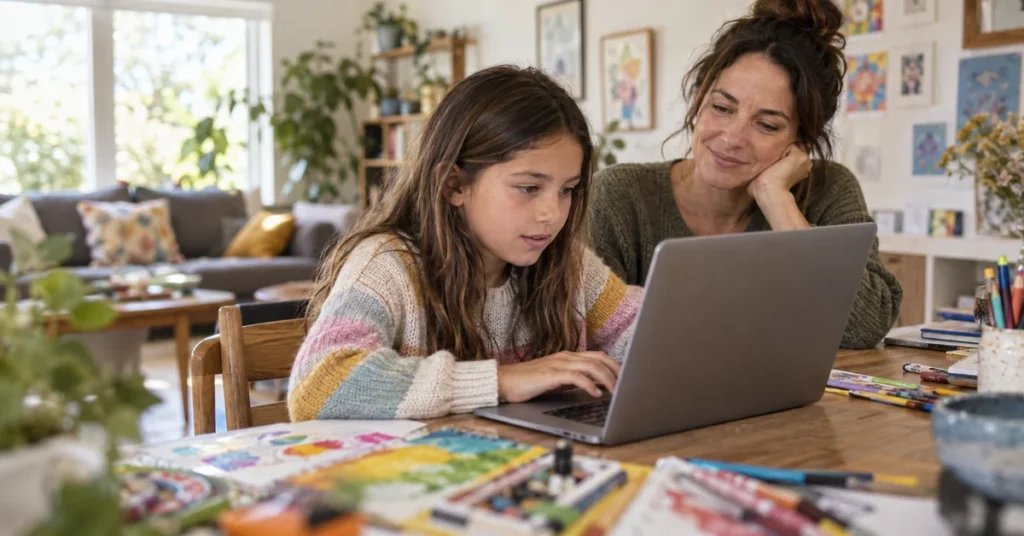
Quick Answer: Is AI screen time for kids different from regular screen time? Yes, when the child is producing something rather than consuming it. A child directing an AI tool to build a project engages differently than a child watching AI-generated content passively. Consider both what your child is doing and whether screen use leaves enough time for sleep, movement, schoolwork, and relationships.
My own kids used to spend hours on YouTube and games, the way most kids do. That changed once I taught them to build things themselves, first through coding by hand, and later with AI. Once they could make a website or a game that actually worked, their time on passive apps dropped on its own. Nobody had to take anything away. They were busy building.
I’ve heard the same thing from other parents over the years, not just about my own children. Parents whose kids were doomscrolling or glued to cartoons and TV have told me the same pattern showed up once their child was introduced to building games and apps, whether through coding directly or through AI. The screen didn’t change. What the child was doing with it did.
That distinction is the real answer to the question behind AI screen time for kids. Look at both the time spent and the thinking, choices, and creative effort involved.
Why Doesn’t All AI Screen Time for Kids Count the Same Way?
The American Academy of Pediatrics’ 5 C’s of media guidance considers the child, the content, calming habits, what media crowds out, and family communication. For AI screen time for kids, this means looking at the activity itself alongside its place in the child’s day.
A child watching AI-generated videos is consuming, in the same way a child watching any other video is consuming. A child directing an AI tool to build something they came up with themselves is producing. The device is identical in both cases. The cognitive experience is not.
This isn’t an argument against screen time limits. Limits still matter. It’s an argument for a second measure alongside the hour count: what is the child actually doing during that time.
What Does Productive AI Screen Time for Kids Actually Look Like?
In practice, it looks like a child who starts with an idea, however small, and uses AI to build toward it. They try something, look at what came back, decide if it matches what they wanted, and adjust. By the end, there’s something finished: a website, a game, a story, an image they designed with intention.
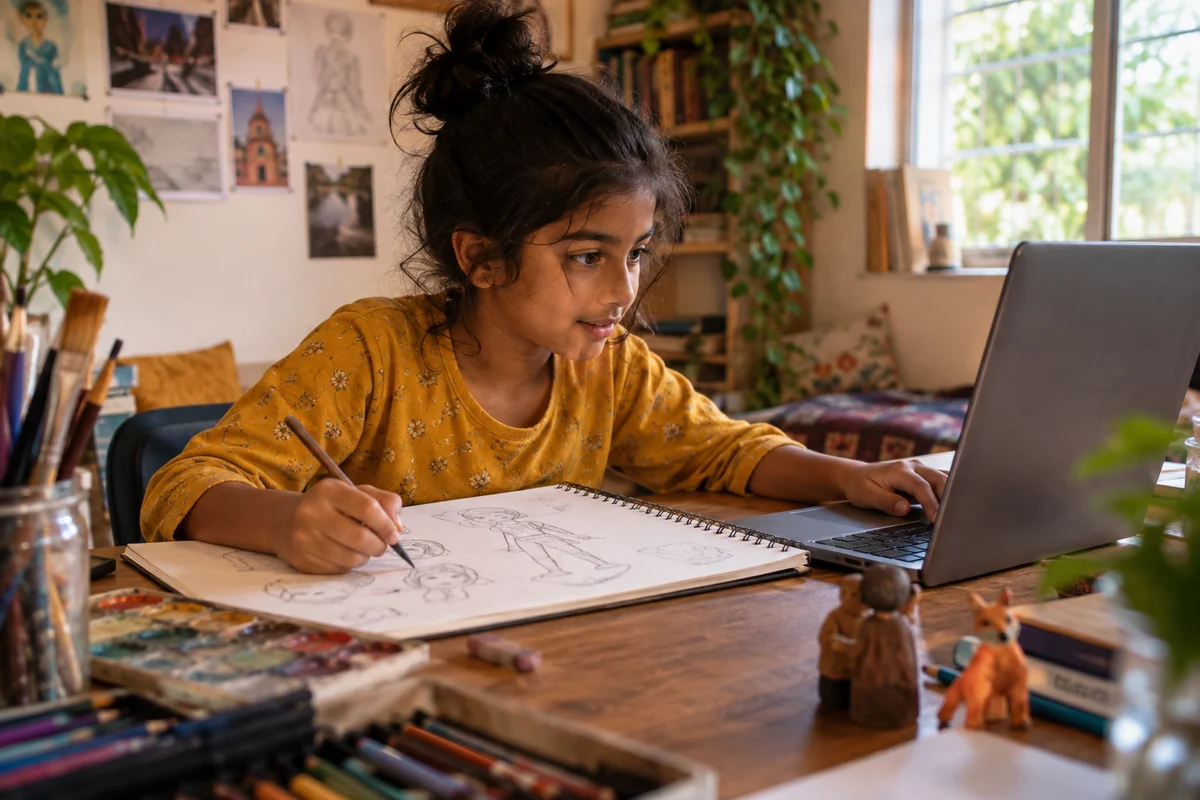
This is exactly what Demo Day looks like at the end of a Transcend AI Academy session. Every child presents something they built themselves, to a live audience, and can explain the decisions they made along the way. That moment is the clearest example of productive AI screen time there is: a child who spent hours on a screen and has something real to show for it.

Is AI Screen Time for Kids Still a Concern If They’re Making Something?
Even productive screen time needs balance. A child absorbed in building something for six straight hours still needs breaks, movement, and time away from any screen. Making this distinction doesn’t remove the need for limits altogether.
What it changes is the quality of the time within those limits. An hour spent building something is simply not equivalent to an hour spent scrolling, even though both are technically screen time. Recognizing that difference lets a parent set limits without treating every screen minute as equally concerning.
How Can Parents Tell the Difference in the Moment?
A simple question does most of the work. Can your child tell you what they’re trying to make right now? If they can answer clearly, they’re likely producing. If they shrug or can’t quite say, they’re likely consuming, even if AI is technically involved.
This connects directly to the think-first habit covered in how to teach children to use AI responsibly. A child who has been taught to state a purpose before opening any tool makes this distinction visible on its own. You don’t have to guess. You can just ask.
It also connects to a concern raised in will AI make kids lazy: a child who skips the thinking step and just opens AI to see what happens is drifting toward the passive end of the spectrum, regardless of how sophisticated the tool is.
How Do You Turn More of Your Child’s Screen Time Into Creative Learning?
The most practical shift isn’t adding new screen time on top of what a child already has. It’s redirecting a portion of existing screen time toward something productive. If a child already has an hour of device time most days, the question becomes whether that hour goes toward consuming or building.
For families who want to make this shift stick, structured guidance helps considerably. A child who has never built anything before benefits from someone showing them what’s actually possible, since most kids haven’t considered that the same device used for games and videos can also be used to make their own. Once that shift happens, as I’ve seen with my own children and heard from other parents repeatedly, it tends to hold.
For families in Canada, the United States, the United Kingdom, and beyond looking for a structured, live, project-based way to make this shift, AI education for kids covers what that looks like across age groups, and is ChatGPT safe for kids addresses the platform-specific safety questions that often come up alongside this one.
Frequently Asked Questions
Is AI screen time for kids worse than other types of screen time? Not inherently. It depends on whether the child is producing something or consuming something. AI-generated content watched passively is no different from any other passive screen time. AI used to build something a child conceived is a different category entirely.
How much AI screen time for kids is appropriate? Choose limits that fit your child and protect sleep, physical activity, schoolwork, and time with other people. A creative project can be a useful part of that plan, but it still needs breaks and a clear stopping point.
My child seems more focused during AI projects than during games. Is that normal? Yes. Many parents notice this. Building something with a clear goal tends to hold a child’s attention differently than passive consumption, and some children who struggle to stay engaged with games or videos become noticeably more absorbed once they’re making something of their own.
Can AI screen time replace other types of play or activity? No single type of screen time, however productive, should replace all other activity. Physical play, reading, and time away from screens entirely still matter. The goal is improving the quality of screen time a child already has, not expanding it.
What age should a child start using AI to build things instead of just consuming content? Children as young as 8 can begin with simple creative AI projects, like generating their own images or building a basic interactive story, that let them see the shift from watching to making. The goal is just showing them it’s possible as early as it makes sense for their attention span.
Does this apply to younger siblings too, if one child has already made the shift? Often, yes. Parents frequently report that once one child in the household starts building things, younger siblings want to try it too, having seen what’s possible firsthand.