Quick Answer: An AI summer camp for kids is a structured programme where children use AI tools to build real creative projects under live instructor guidance. Sessions run in small groups, learning is project-based, and every child presents a completed piece of work at the end. Transcend AI Academy runs live online AI summer camps for children ages 8 to 16 across three batches each summer.
You see the words “AI Summer Camp” on a Facebook post. Your child is curious about AI. You know they should probably learn something about it this summer. The registration deadline is in three weeks.
But you have no idea what an AI summer camp actually is, what your child would do there, or whether it is serious learning or just a new label on screen time.
That question deserves a straight answer. Here is what an AI summer camp for kids actually involves.
What an AI Summer Camp Actually Is
At its core, an AI summer camp for kids is a structured learning programme where children use AI tools to build real projects under the guidance of a live instructor. The word “camp” covers a wide range. Some programmes run for a week on a university campus. Others run as live online sessions across two weeks. What they share, when run well, is a curriculum built around creation rather than passive watching.
The two things that separate a genuine AI summer camp from a loose collection of tool demonstrations are live instruction and a project the child made themselves. A child who finishes a programme with a completed digital project they built, tested, improved, and can explain in their own words has been through a real learning experience. A child who typed prompts into ChatGPT without structure, guidance, or a finished outcome has not.
A child who finishes a programme with a completed digital project they built, tested, improved, and can explain in their own words has been through a real learning experience.
What Children Do in a Typical AI Summer Camp Session
A session at a well-run AI summer camp follows a creative loop. The child describes what they want to make, uses an AI tool to generate a starting point, evaluates what comes back, and improves the result through their own decisions. That loop repeats across different tools and different types of projects throughout the programme.
In practice this means a child might spend one session generating and improving AI visuals, the next building a simple web page, and the week after that working on an interactive project like a quiz, a game, or a story path. The tools change. The thinking process stays the same.
The second week of a well-structured programme shifts the frame. The child chooses the direction of their own capstone project and spends several sessions building, testing, and refining it. The last day is Demo Day. Every child presents what they made to a live audience, walks the audience through their process, and explains which parts came from AI and which ideas came from them.
For a detailed day-by-day breakdown of exactly what children build across both age tracks, the article on what your child will build at an AI summer camp covers this in full.
What Children Take Home
Three things leave every AI summer camp with every child.
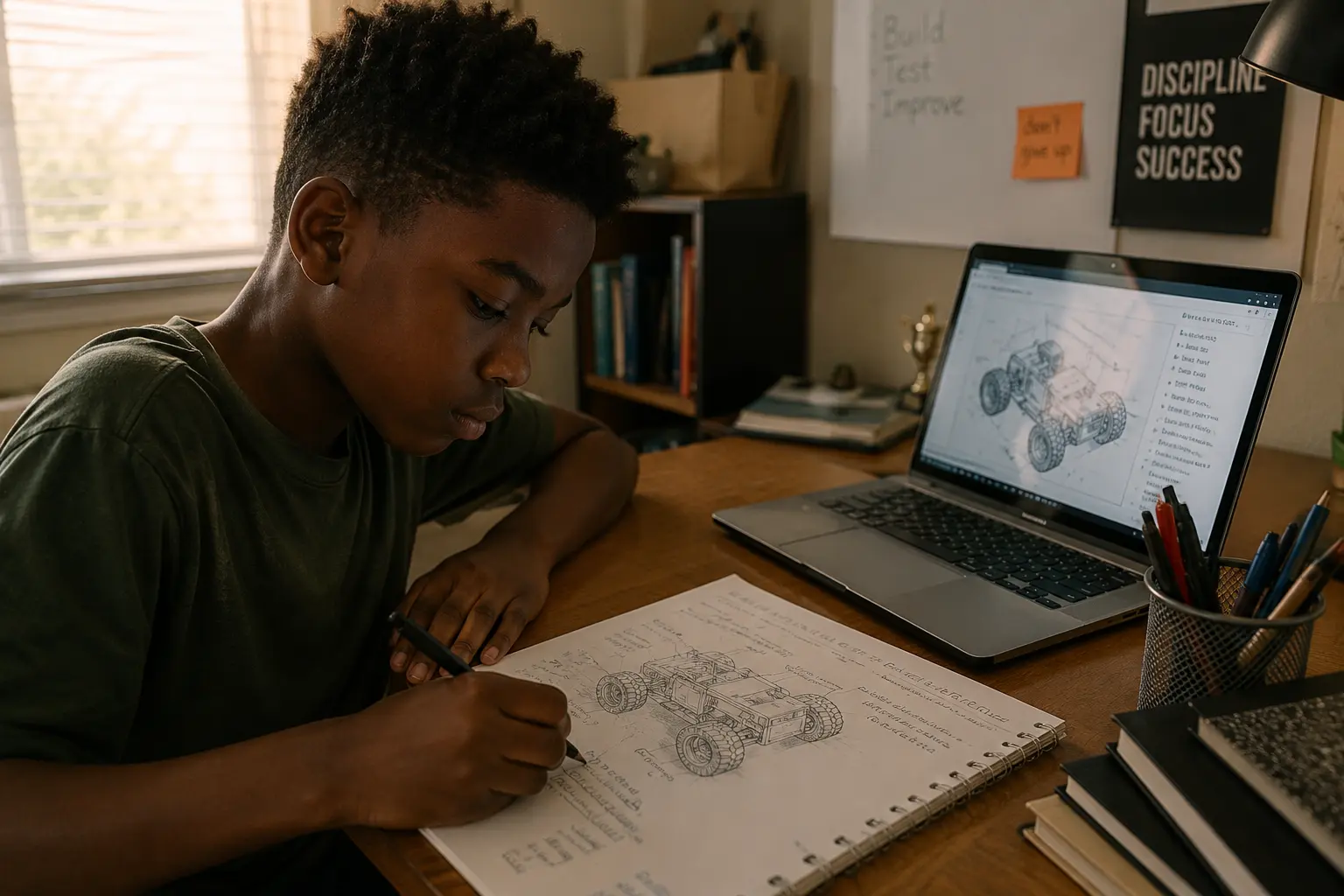
The completed project is a real digital artefact that exists online and can be shared, shown, and pointed to. A child who builds a website, a web-based tool, or a creative AI project during the programme leaves with something tangible. That tangibility changes how they talk about AI, from “I learned about AI” to “I built something with AI.”
The portfolio is a record of the work completed across the programme. For older children this becomes genuinely useful. A teenager who can show documented AI project work completed before they turned 16 has something real to include in future school and university applications.
The certificate confirms completion of a structured, instructor-led programme. Research on project-based learning consistently shows that children retain knowledge and develop confidence at significantly higher rates when learning leads to something tangible they created themselves. The habit of questioning AI outputs and improving them, built across the programme through consistent practice, is the fourth thing children take home, and the hardest to photograph.
Who an AI Summer Camp Is For
Most AI summer camps serve children ages 8 to 16, though the experience differs significantly across that range. Younger children ages 8 to 11 work with more guidance, simpler tools, and a stronger emphasis on creative expression. Older children and teenagers ages 12 to 16 take on more complex projects, work with greater independence, and are expected to apply ethical reasoning to their own work.
Prior experience with AI tools is not required for entry-level programmes. A child who has never opened ChatGPT can start a well-designed AI summer camp with no disadvantage. The skills are taught from scratch. What matters is curiosity and a willingness to try things and improve them.
At Transcend AI Academy, the summer camp runs two tracks: AI Explorers for ages 8 to 11 and AI Innovators for ages 12 to 16. Both tracks run live online across ten sessions. For guidance on when children are developmentally ready to begin structured AI learning, the article on what age should kids start learning AI covers this in detail.
How Online AI Summer Camp Works
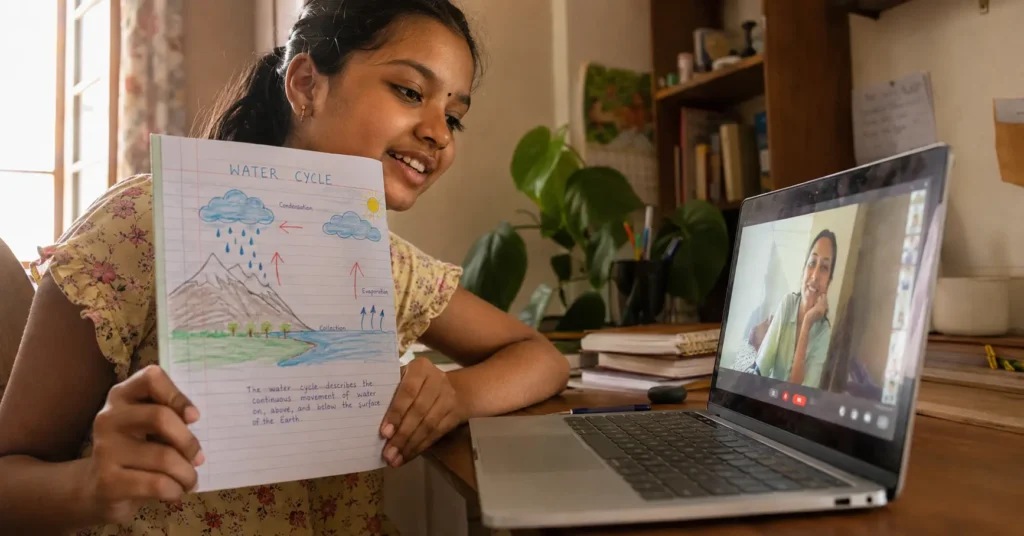
A live online AI summer camp runs exactly as the name suggests. Live sessions with a real instructor, a small group of children, and a curriculum that requires active participation from the first session to the last. The child needs a laptop and a stable internet connection. Nothing else.
The format suits AI education particularly well. AI tools are built for digital environments. A child learning to work with ChatGPT, Canva, Suno, or ElevenLabs in a live online session is working in exactly the context where those skills will be used. The learning environment matches the subject.
Online also removes the geographic barrier entirely. Families in Canada, the United States, and the UK can join the same session with the same instructor without travel costs or time away from home. For families outside major cities, or in countries where quality in-person AI camps simply do not exist, a live online AI summer camp is the most practical way to access this kind of education.
This is not a child watching AI videos on YouTube. A live instructor can see what the child is working on, ask why they made a specific choice, and respond to that answer in real time. That interaction is where the learning happens.
For a thorough look at whether AI tools and online learning are appropriate for children, the article on whether AI is bad for kids addresses those concerns honestly.

A live instructor can see what the child is working on, ask why they made a specific choice, and respond to that answer in real time. That interaction is where the learning happens.
How to Tell a Serious AI Summer Camp from a Superficial One
The marketing language in this space has converged. Every programme promises live instruction, experienced teachers, and hands-on learning. Three questions cut through the surface.
What will my child build by the end? A good answer names a specific project type and explains what decisions the child will make along the way. An answer that describes topics covered or tools introduced without specifying what the child creates signals that the curriculum is built around exposure, not production.
An answer that describes topics covered or tools introduced without specifying what the child creates signals that the curriculum is built around exposure, not production.
How many students are in each session? A specific number, ideally eight or fewer, signals that the programme is designed around individual attention. Vague language about “small groups” or “community learning” without a number is worth pressing on.
How is responsible AI use taught in this programme? A good answer describes how ethics, accuracy, and responsible use are woven through the curriculum. A programme that mentions safety only when asked, or treats it as a single session at the end, is incomplete.
For a full framework covering every criterion and the red flags to walk away from, the guide on how to choose an AI academy for kids covers this in detail.
Frequently Asked Questions
What is an AI summer camp for kids?
An AI summer camp for kids is a structured programme where children use AI tools to build real creative projects under the guidance of a live instructor. Sessions run in small groups and the programme ends with a project the child built, presented, and can show to others.
Does my child need coding experience before joining an AI summer camp?
No prior coding experience is required for entry-level AI summer camp programmes. Children learn to work with AI tools from scratch. The skills are taught from the first session. What matters is curiosity, not prior technical knowledge.
What is the difference between an AI summer camp and a coding camp?
A coding camp teaches children to write programming instructions for a computer. An AI summer camp teaches children to work with AI tools to create, evaluate, and direct outputs. The skills are complementary but different. AI camps build creative and critical thinking with AI tools; coding camps build logic and sequencing skills.
How long does an AI summer camp typically last?
Programme lengths vary. Some run for a focused week; others run across two weeks with daily or near-daily sessions. What matters more than the duration is whether the curriculum is built around a real project the child completes and presents by the end.
Can children outside Canada join an online AI summer camp?
Yes. Live online AI summer camps are open to families in the United States, the UK, and internationally, as long as the session times work for the family’s time zone. Parents should confirm the schedule before enrolling.
What should my child have ready before their first session?
A laptop and a stable internet connection are the two requirements. Most tools used in AI summer camps run directly in a browser. No specialist software needs to be installed in advance.
A well-structured AI summer camp is a concentrated window of learning. The habits it builds, including questioning AI outputs, evaluating results, building something real, and presenting it to an audience, stay with a child long after the programme ends. The question worth asking before you choose a programme is the same one worth asking at the end of it: what did your child make?
If your child is between 8 and 16 and you are ready to find a live, structured AI summer camp where they build real projects in small cohorts, click the button below to find out details about upcoming summer sessions. Three batches across the summer. Every session built around creation rather than consumption.