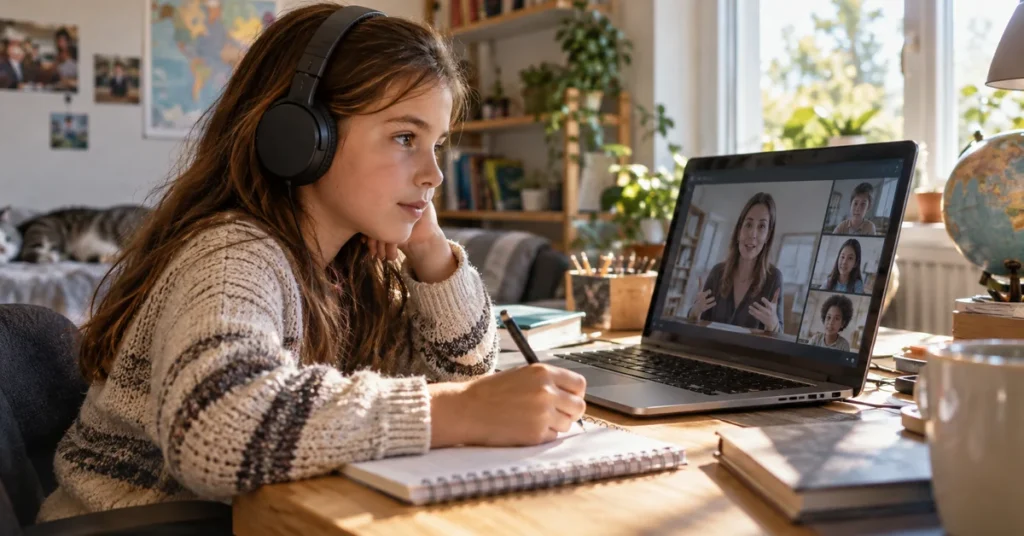
Quick Answer: Online AI classes for kids are structured lessons where children learn to use AI tools through guided projects. The strongest ones are live, run in small groups, and end with something the child built and can explain. Recorded content passes on information, while a live instructor giving feedback on a child’s own work builds skill.
Online AI classes for kids come in very different forms, and from the outside they can look identical. A recorded course, a self-paced platform, a private tutor, and a live small-group class can all describe themselves with the same words.
The difference shows up quickly once a child is inside. In a live class, a child asks a question, an instructor sees the work on screen, and the next step changes because of what was just said. In a recorded one, the video plays the same way for every child. This guide explains how to tell them apart and what to look for before you enrol.
What Are Online AI Classes for Kids, and How Do They Work?
Online AI classes for kids teach children to use AI tools to make things: images, websites, games, stories, and small interactive projects. The better ones also teach children to judge what the AI gives them, so they can improve it instead of accepting whatever appears.
Most classes follow one of four formats. Self-paced platforms let a child work through lessons alone. Private tutoring pairs one child with one teacher. Short intro sessions give a taste of the subject in a single sitting. Live small-group classes run over several weeks with an instructor and a few other students.
Each format has a place. The question is which one matches what your child needs, and the rest of this guide gives you a way to decide.
How Do Live Online AI Classes for Kids Differ From Recorded Courses?
A recorded course delivers content. A live class delivers feedback. That single difference accounts for most of the gap in what children come away with.
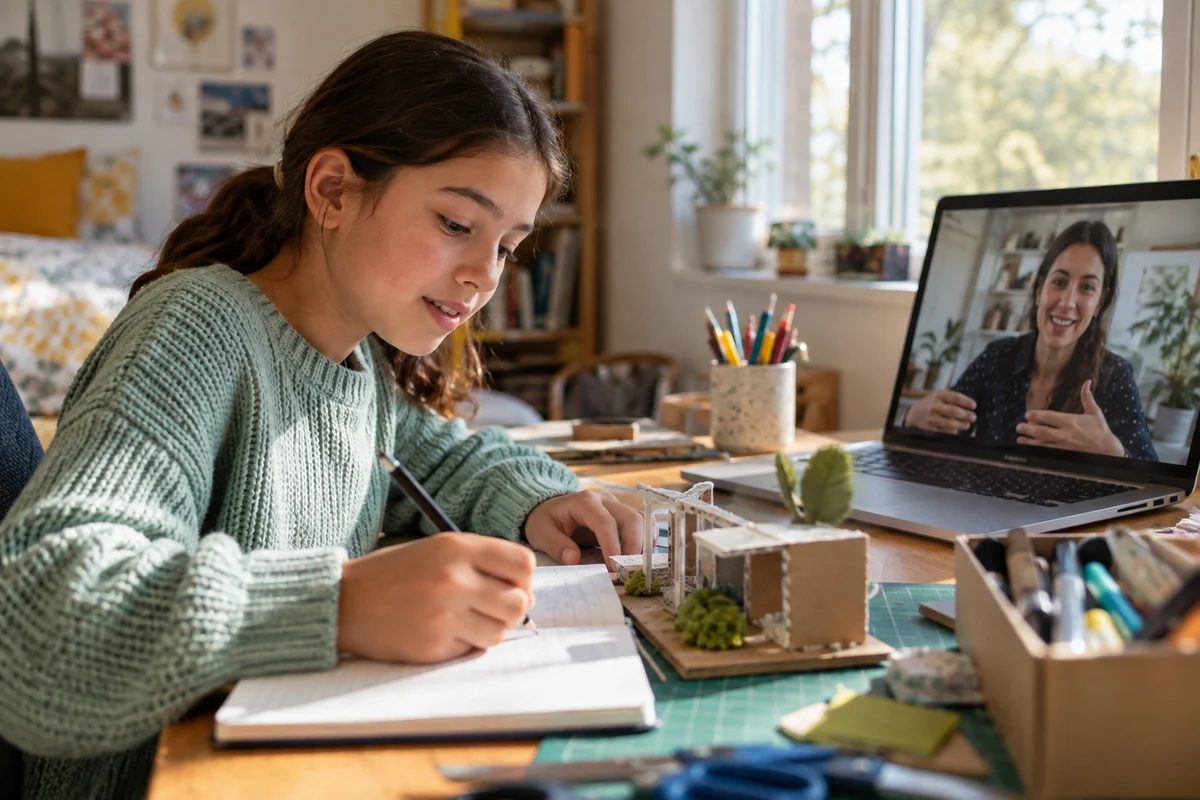
When a child follows a video, nobody checks whether the image they generated matches their idea, or whether the instruction they typed was clear or vague. A live instructor sees both in the moment and can correct them before the child moves on. In my own beginner classes, I hand students ready-made prompts to start with, and some paste them in without reading them. A video cannot notice that. An instructor can, and can stop to ask what the student expected to see.
The OECD’s work on generative AI in education points the same way, placing human judgement, feedback, and oversight at the centre of how AI is used in learning.
Location matters far less than most parents expect. One parent in Oregon searched for AI camps near her home, found none within driving distance for her 8-year-old and 10-year-old, and enrolled both in a live online programme instead. They attended from home and presented finished projects at the end. Live and small made the difference for them, and a building was never part of it.
What Makes Online AI Classes for Kids Worth the Time Each Week?
Three things make the hours count. The class is live, so the child gets real-time feedback. The group is small enough that the instructor sees every child’s work. And the term ends with a finished project the child can show and explain.
If a class cannot point to all three, it is worth asking what the child actually leaves with. A certificate of attendance shows time spent. A project the child built, tested, and can describe shows what was learned.
What Should Children Ages 8 to 17 Learn in an AI Class?
Age changes the depth and the support, and the core skills stay the same. Children in every age group should practise giving clear instructions to AI, checking what comes back, improving it, and explaining what they made and what they changed.
Younger children, around ages 8 to 11, do well with step-by-step support while they turn an idea into something they can see, use, and share. Websites, creative media, and simple interactive projects suit this stage. Teenagers, ages 12 to 17, have more room to plan, solve problems, and make decisions they can defend. Websites, games, and useful tools suit them, along with testing, troubleshooting, and presenting the thinking behind the work.
Responsible use belongs in every session at every age. The habit of thinking first, checking the output, and standing behind the result is covered in detail in how to teach children to use AI responsibly, and a good class builds it into the work itself.
How Do You Choose the Right Online AI Classes for Kids?
Five questions cut through most of the marketing.
Is the instruction live? Ask whether a person is teaching in real time, or whether the child watches pre-recorded lessons with occasional support.
How big is each group? Individual feedback gets harder as groups grow. Programmes that do not publish a maximum often do not have one. Transcend AI Academy caps every group at eight.
What does a child finish with? A project the child made, understands, and can explain is the clearest evidence of learning.
Is responsible use taught, or only mentioned? A single safety slide on day one is different from a habit practised every session. The answer shows up in how the class handles checking and explaining.
Does the schedule suit your family? A weekly class over a full term builds habits differently from a single intensive week. Neither is wrong. Match the rhythm to your child’s attention and your calendar.
For a wider look at how this fits into a child’s overall learning, AI education for kids covers the full picture, and what age to start helps match a class to your child’s stage.
What Does a Ten-Week Term Look Like Week to Week?
A term gives children something a single session cannot: time to build, get feedback, improve, and try again. At Transcend AI Academy, each school-year term (Fall, Winter, and Spring) runs ten Saturdays, with one live two-hour class each week. The programs serve ages 8 to 17 in two age groups, with a maximum of eight students per group.
The teaching follows a repeating pattern: ask AI clearly, check what it gives back, improve it, and explain it. By the end of the term, the child has a project and the habit of describing how it came together.
Families in Canada, the United States, the United Kingdom, and beyond can join the same live classes, since sessions run online. The Summer Holiday program is a different rhythm: two-week camps that run Monday to Friday during the school break. The programs page lists each season, from the Fall Term to the Winter Term, Spring Term, and Summer Holiday program.
Frequently Asked Questions
What age can children start online AI classes? Children from about age 8 can begin when the class is designed for their stage. Younger learners need more step-by-step support, and older learners get more room to plan and make decisions.
Does my child need coding or AI experience? Not for a well-designed beginner class. Look for programmes that state clearly where a first-time student starts, and ask about a beginner starting point if you are unsure.
Are live classes better than self-paced courses? For most children, live classes give more, because an instructor can correct and guide the child’s own work as it happens. Self-paced courses suit highly independent learners who only need content.
How long should a class be for this age range? Younger children focus well in sessions of around two hours with breaks, and a weekly rhythm lets them practise between classes. Very long sessions can tire them.
How much screen time does this add? A weekly two-hour class is time spent making something, and the difference between building and passive viewing is covered in AI screen time for kids.
Is it safe for children to use AI in a class? A live instructor who sees every child’s work, with responsible use taught every session, is a stronger setup than unsupervised use at home. For platform-specific questions, is ChatGPT safe for kids explains the age policies and risks.
How is a school-year class different from a summer camp? A camp is an intensive burst over a couple of weeks. A term spreads the learning across ten weeks, which gives children time to revisit, improve, and build habits. Both can work, depending on your child and your calendar. For more on camps, see online vs in-person AI camps and productive summer activities for kids.