

Ages 8–16 · Live Online
Max 8 students per class
Structured summer skill program · Beginner-friendly

Your Child Learns to Direct AI. Build With It. Stay Smarter With It.

A live, instructor-led AI summer camp for kids ages 8 to 16. Ten days of real projects, rigorous thinking, and responsible AI use, delivered in small cohorts where every child gets seen.

Google Meet · Demo Day · Basic laptop comfort required
AI Summer Camp for kids

Every session starts with your child’s ideas.

AI shows up to amplify what’s already theirs — not to do their thinking for them. That’s the whole philosophy, built into every lesson.

🧠

Ideas before AI, always

Students brainstorm and outline first. When AI enters the room, it deepens and expands thinking that’s already their own.

🛠️

A builder's mindset, by design

They learn to direct tools, critique outputs, and ship original work — leaving with a portfolio and the confidence that built it.

🛡️

Safety and ethics, built in

Privacy basics, smart boundaries, and responsible use — taught in plain, age-appropriate language throughout the whole camp.

What your child walks away with

Ten days at AI camp. Tangible skills. A project they made themselves.

The children who thrive in an AI-driven world are the ones who know how to think clearly, ask precise questions, and produce original work. This camp trains exactly that — through real projects and hands-on creation.

01

A completed AI brand project

A fictional brand website, visuals, ad assets, jingle, quiz or mini game, and pitch they built and improved with AI.

02

Sharper critical thinking

The habit of forming their own ideas first — and using AI to pressure-test and expand them.

03

Confident AI communication

Clearer prompting, better questioning, and the skill to evaluate and improve what AI gives back.

04

Digital wisdom they’ll keep

A practical understanding of safety, privacy, and responsible use that travels with them long after camp ends.

Summer Camp curriculum

What your child will build and learn each day.

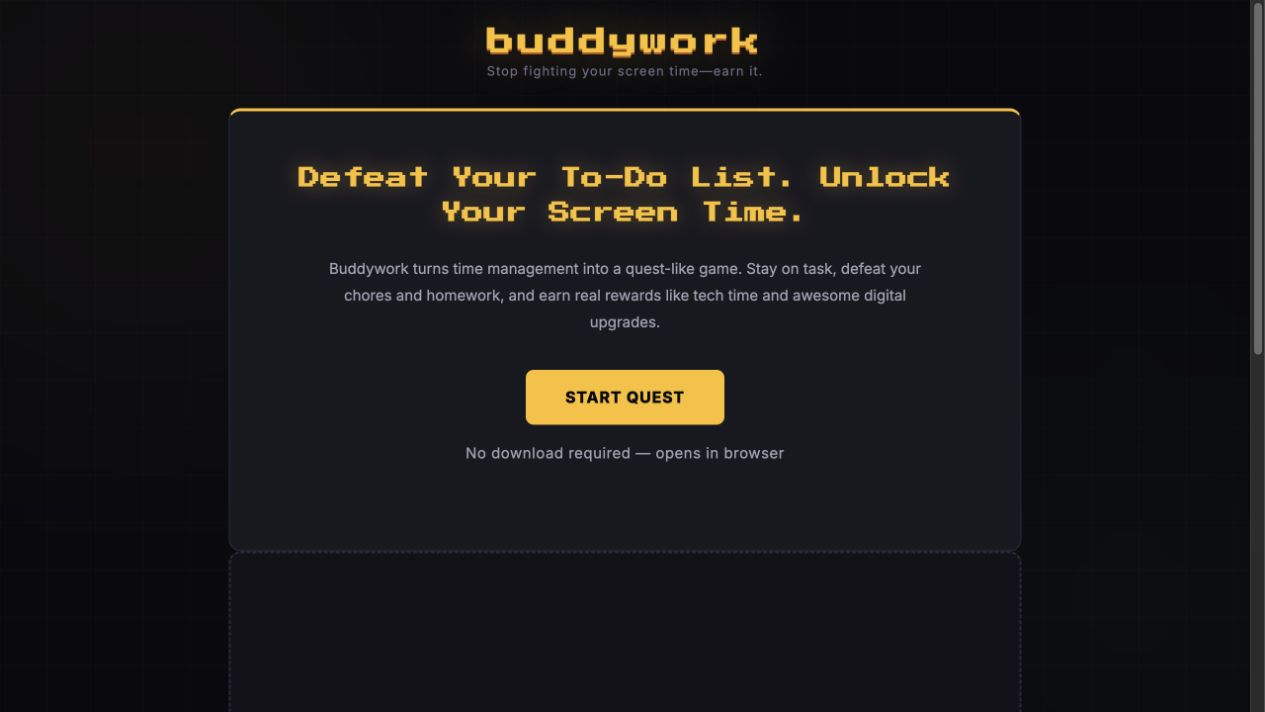
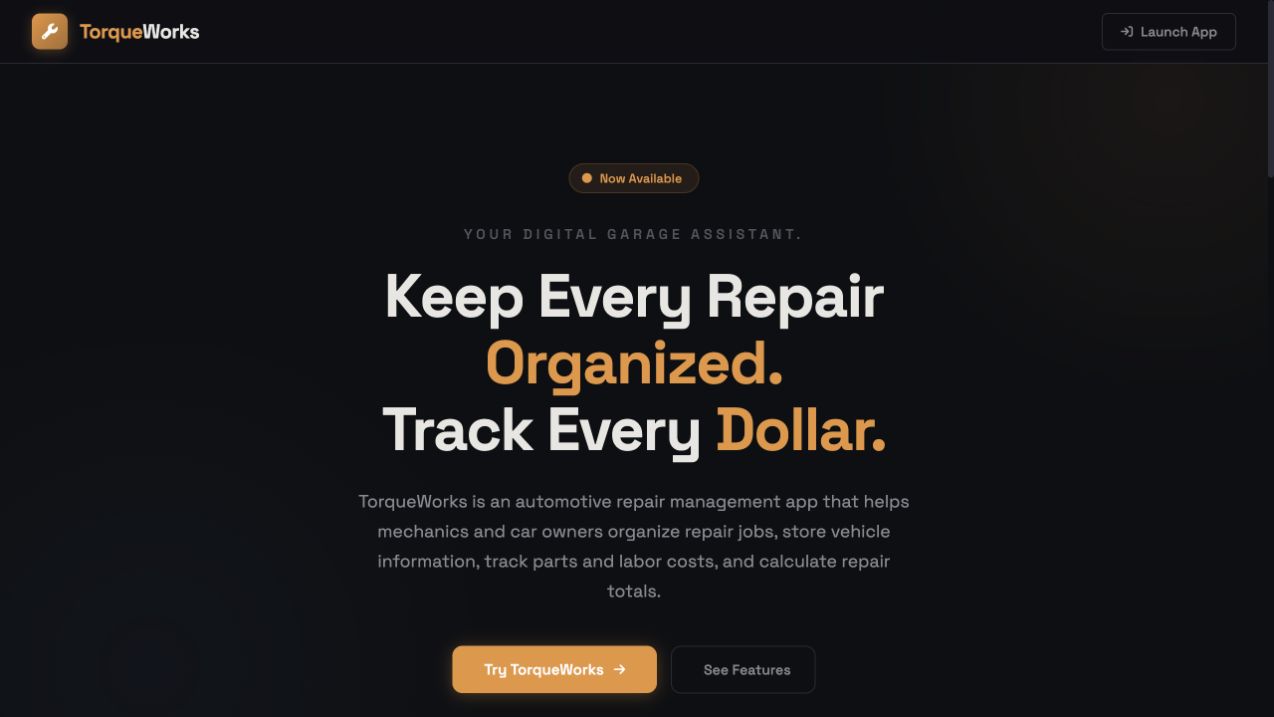
Ten live sessions follow one connected build sequence. Students develop a brand idea, add media and interactivity, publish their work, and prepare to explain it on Demo Day.

One connected project journey. Open a two-day module below to compare what students ages 8–11 and 12–16 will build at each stage.
Day 1

Build and understand the website.

Website structure, HTML and CSS files, responsive design, and testing changes in the browser.

Ages 8–11

Build my first brand website

Create a fictional product-brand site with key sections, a footer, mobile menu, buttons, and a colourful visual style.

Ages 12–16

Build, read, and edit the site

Create a professional responsive brand website while learning how the HTML and CSS work and making direct edits.

Day 2

Sharpen the message and add the first images.

Audience-aware writing, useful page sections, image planning, generation, placement, and revision.

Ages 8–11

Improve it and make pictures

Improve the website words, add sections, plan brand images, create a product picture, and place it correctly on the site.

Ages 12–16

Polish, position, and add visuals

Give the brand a distinct look and voice, improve its positioning, add credible sections, and create and place brand images.

Day 3

Build the visual identity and campaign.

Consistent branding, logos, gallery assets, scripts, audio and video planning, and media integration.

Ages 8–11

Finish my brand pictures

Create a logo and gallery images, then fit the new visuals into the website so the brand feels complete.

Ages 12–16

Bring the brand to life

Write an ad script, design a brand presenter, plan a jingle, and build a campaign section for video and audio.

Day 4

Create media or an interactive feature.

Turning a clear idea into a working asset, reviewing the result, and improving how visitors experience it.

Ages 8–11

Make my ad video

Write a short ad script, design a presenter, create the video, and add a video section to the website.

Ages 12–16

Make the site interactive

Brainstorm and build a useful customer tool, then add another interactive touch that makes the site more helpful.

Day 5

Add sound and build more independently.

Creative direction, writing original prompts, working from a brief, and improving a build against clear requirements.

Ages 8–11

Make my jingle

Create and refine a short brand song, then add the finished jingle and brand video to the website.

Ages 12–16

Client website and AI App Studio

Interview a client, write an original brief and prompts, build to the brief, then plan and create a standalone app with greater independence.

Day 6

Build an interactive experience.

Planning logic, creating multiple pages or game states, testing interactions, and improving the experience.

Ages 8–11

Find Your Match and Fun Zone

Turn the project into a multi-page site with a matching quiz, Fun Zone, memory game, sounds, and shareable results.

Ages 12–16

Build a browser game

Plan and build an original game, test how it plays, and improve it with stronger mechanics and personal ideas.

Day 7

Publish, launch, and extend the project.

Hosting a working project, checking the live link, adding launch assets, and communicating what was built.

Ages 8–11

Go live and build a game

Publish the brand website, then build and improve a browser game with levels, scores, sounds, and a personal twist.

Ages 12–16

Market and launch it

Connect a contact form, plan the launch, create a launch page, and produce promotional posts and a flyer concept.

Day 8

Turn the work into a pitch.

Selecting the strongest evidence, organizing ideas into slides, and expressing the value in one clear sentence.

Ages 8–11

Build my pitch deck

Plan the presentation, create a visual pitch deck in Gamma, and write a clear one-line pitch for the brand.

Ages 12–16

Pitch and prepare for Demo Day

Organize the problem, solution, audience, live build, and personal contribution into a concise presentation.

Day 9

Tell the story and rehearse.

No AI for the storytelling work: students practise explaining choices, reveals, independent additions, and mistakes they fixed.

Ages 8–11

Tell my project story

Turn features into short, memorable stories and practise a complete presentation from opening to finish.

Ages 12–16

Present judgment, not a feature list

Build several strong mini-stories, explain what went wrong and how it was solved, then rehearse the full pitch.

Day 10

Portfolio and Demo Day.

Organizing evidence, reflecting on the process, presenting live, and answering questions about the work.

Ages 8–11

Present my brand

Use a clear presentation order, reflect on the project journey, and proudly demonstrate the finished brand experience.

Ages 12–16

Build and present my portfolio

Create one portfolio page for the projects, add clear project descriptions, and use it as the live Demo Day showcase.

Parent review

What hands-on AI learning looked like to one family.

“Our girls recently completed the 2-week AI class, and we are beyond impressed with what they learned and accomplished.”

The parent highlighted the hands-on projects, practical skills, creativity, and confidence her children developed during the program.

Hima Patel ★★★★★ Google review
Original parent review
Five-star Google review from Hima Patel describing her children's positive two-week AI class experience

Program details

Live. Structured. Built around small cohorts.

2-week batches · Monday–Friday · 2 hours daily · Live on Google Meet · Small guided groups

SCHEDULE

Monday – Friday

Morning: 10am-12pm (EDT) | Age 8-11

Afternoon: 2pm-4pm (EDT) | Age 12-16

DURATION

10 sessions · 2 hours each

20 live instructional hours total

CLASS SIZE

Maximum 8 students

Small enough that every child gets called on, challenged, and celebrated.

PLATFORM

Google Meet

Live instruction on Google Meet. If a student misses class, contact us to confirm the current catch-up option.

INCLUDED

Demo Day presentation + Certificate + AI brand project

CLASS SCHEDULE

Morning · 10am – 12pm (EDT)

Ages 8-11

AI Explorers

Afternoon · 2pm – 4pm (EDT)

Ages 12-16

AI Innovators

Two age tracks

Ages 8-11

Guided website building, beginner prompting, brand visuals, simple interactivity, and final presentation.

Ages 12-16

AI-assisted coding, brand strategy, working web features, campaign assets, hosting, and portfolio-style presentations.

Tools used (all free tier)

Laptop required. No tablets. Students should be comfortable using a browser, keyboard or trackpad, tabs, copy/paste, and following simple English instructions. Younger students may need a parent nearby for setup and sign-ins.

SUMMER 2026

Choose the two weeks that fit your family.

Each batch covers the same curriculum. Choose an upcoming batch that works for your schedule.

Batch 1

July 6 – 17

Mon–Fri 

Concluded — enrollment closed.

Batch 2

July 20 – 31

Mon–Fri 

In progress — enrollment closed.

Batch 3

Aug 3 – 14

Mon–Fri 

Morning · 10am–12pm (EDT) Ages 8–11
4 spots available · closes when full
Afternoon · 2pm–4pm (EDT) Ages 12–16
3 spots available · closes when full
📹
Miss a session?

If your child misses a session, contact us so we can confirm the current catch-up option for that batch.

9,000+
Children taught through 9jacodekids Academy, founded by Transcend founder Ugo Nkwocha.
10+
Years in kids tech education

founder and academic director

Ugo Nkwocha

Founder · Academic Director · Engineer · Educator

Ugo Nkwocha leads the curriculum, educational direction, and teaching standards behind Transcend AI Academy. He founded and spent more than a decade leading 9jacodekids Academy in Nigeria, an online coding academy that taught more than 9,000 children coding and digital skills.

That experience shapes how every Transcend program is delivered: small groups, clear instruction, responsible AI use, and projects students can explain rather than simply generate. Classes are led by Transcend instructors, and instructor assignments may vary by cohort.

"I built this because I wanted something that didn't exist yet — a programme I'd enrol my own children in without hesitation."

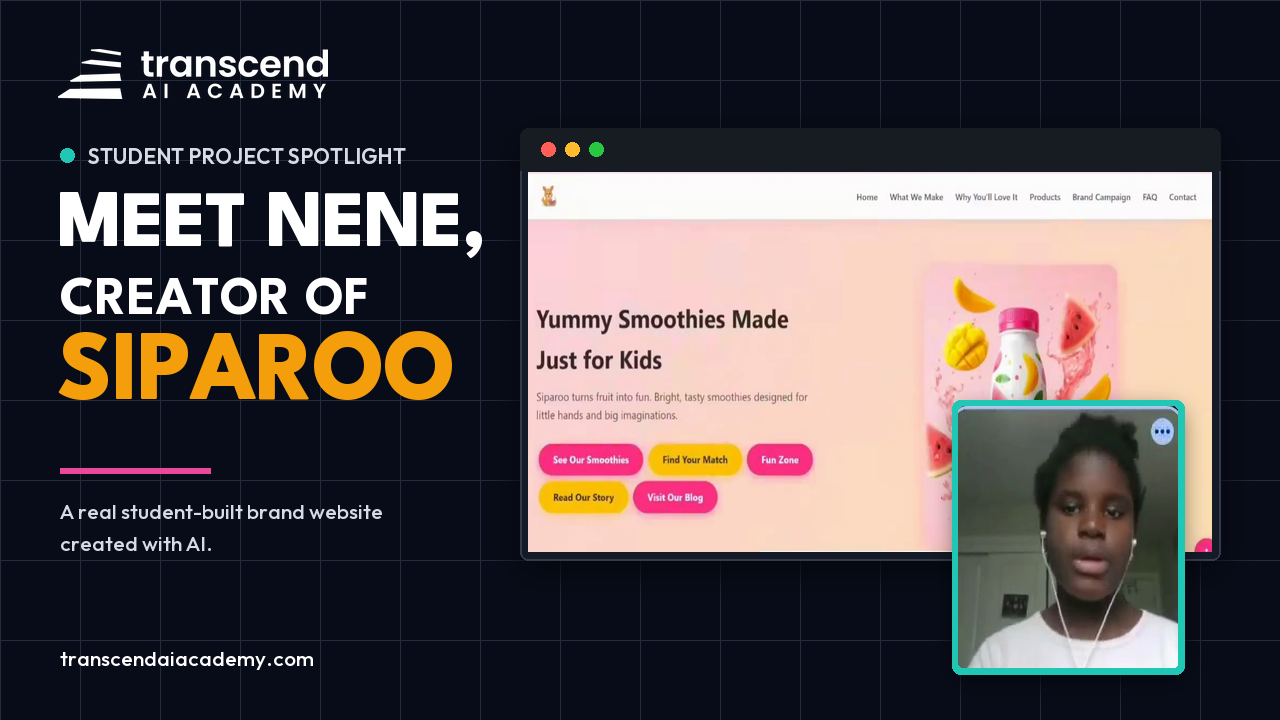
Student Demo Day

Watch Nene explain what she built and how she solved a real problem.

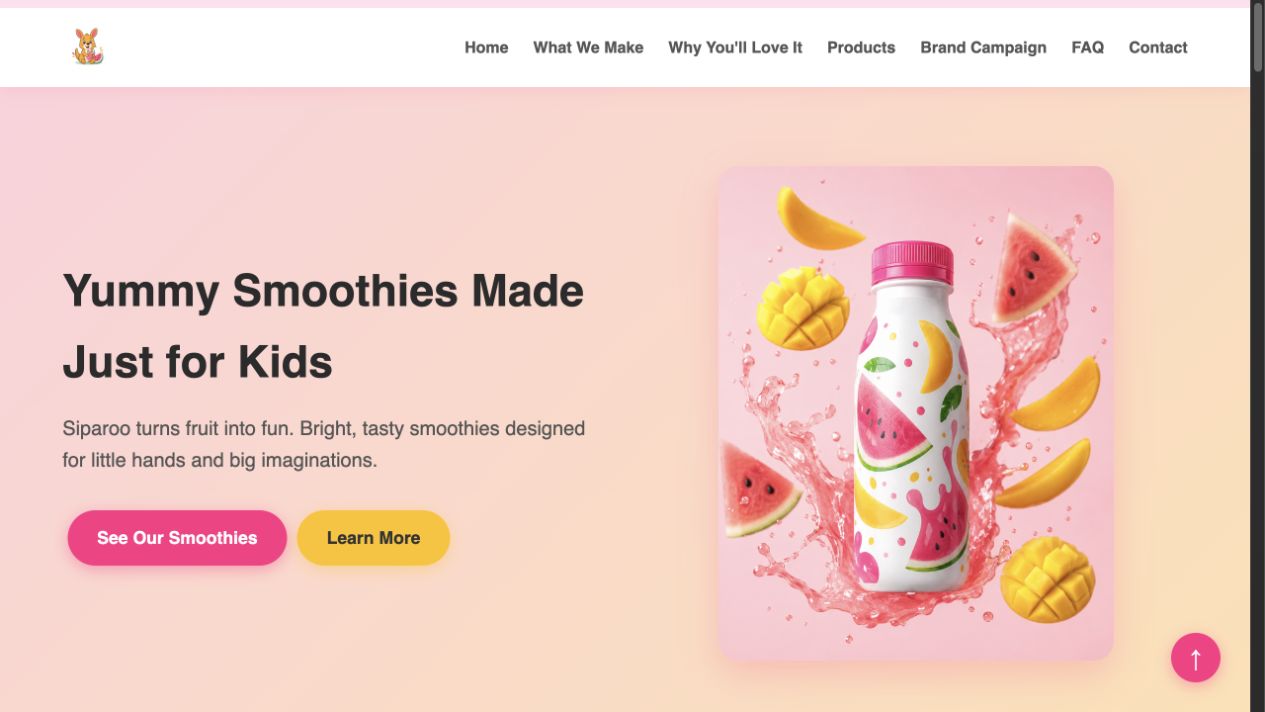
During Demo Day, Nene shows the Siparoo website, explains the pages she created herself, and walks through how she improved her prompt to solve a mobile navigation problem.

Play Pause
Backward 10s Play Pause Forward 10s Unmute Mute
/
Settings Playback Accessibility
Announcements
Keyboard Animations
Enter PiP Exit PiP Enter Fullscreen Exit Fullscreen

Nene, creator of Siparoo | Presented to her instructor, classmates, and family during Summer Camp Demo Day.

ENROLLMENT

Claim Your Child's Seat

Each package covers one full 2-week session — 20 live instructional hours — per child enrolled. Before you enroll: no prior AI or coding experience is required, but students should be comfortable typing, clicking, switching tabs, and using copy/paste.

$249 CAD for 1 child

Before you enroll: No prior AI or coding experience is required, but this is a live laptop-based class. Students should be comfortable typing, clicking, switching tabs, and using copy/paste. Package pricing is shown below.

Standard pricing is active
00 days
:
00 hrs
:
00 min
:
00 sec

1 child

$249 CAD

2 children

$449 CAD
Save $49 vs individual

3 children

$635 CAD
Save $112 vs individual

4 children

$799 CAD
Save $197 vs individual
💡
How sibling pricing works

Each package covers one 2-week batch per child. Children are placed in their correct age group automatically — you choose batch dates at checkout.

Sibling pricing

Sibling packages are listed below so families can choose the option that matches the number of children enrolling.

Seats fill fast and stay filled.

Each class holds a maximum of 8 students. When seats close, registration closes with them.

💬 Have a question? Message us on WhatsApp and we’ll get back to you quickly.

REFUND POLICY

Fair to families. No surprises

100%

Full refund up to 7 days before your batch starts — no questions asked.

50%

Half refund up to 48 hours before the first session — still fair at the wire.

0%

Once camp begins, refunds are closed — because your seat was held for your child the entire time.

AFTER ENROLLMENT

Here's what happens after enrollment.

1

Your confirmation email includes your receipt, batch details, and family portal access.

2

Inside the portal, you will find the schedule, Google Meet link, parent prep notes, and readiness details.

3

During camp, the portal keeps assignments, class updates, and catch-up guidance in one place.

🎓

After Demo Day, certificate details, portfolio updates, and final project notes are shared through the portal.

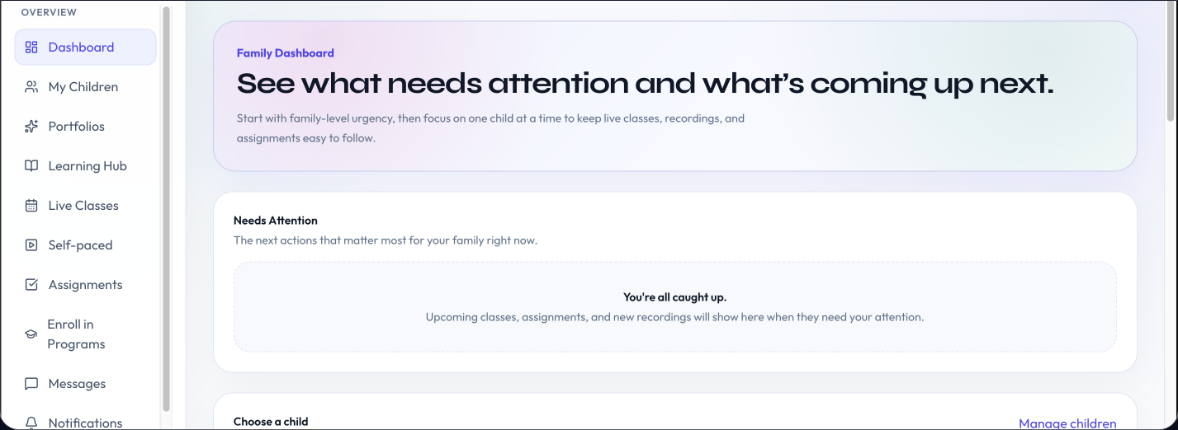
Family portal

Parents can see what needs attention and what comes next.

The family portal keeps live classes, assignments, recordings, messages, and each child's portfolio in one organized place.

Stay organized

See upcoming classes, assignments, and new recordings without searching through emails.

See each child

Switch between children while keeping the whole family's learning in one clear view.

Follow progress

Find portfolios, activity, messages, and notifications together in one place.

PARENT QUESTIONS

Answered clearly.

By Demo Day, students present a project that matches their age track. AI Explorers build a fictional product brand with a website, AI-generated visuals, ad or video draft, jingle, quiz or mini game, and pitch slides. AI Innovators build a more professional brand site with campaign assets, a working feature or mini-tool, and a founder-style pitch deck. The goal is not passive AI use. It is building, testing, improving, and explaining their work.

Ages 8–11 join the morning session (10am–12pm) as AI Explorers. Ages 12–16 join the afternoon session (2pm–4pm) as AI Innovators. The schedule is set by age group — there’s no choice to make on timing. When you enroll, your child is automatically placed in the right session for their age. Both groups run Monday to Friday for two weeks.

The entire program is built around the opposite. Every session opens with a “Think First” workflow — students brainstorm and outline before AI enters the picture. Then they use AI to deepen, expand, and refine what’s already theirs. By camp’s end, the habit is set: ideas come from them first, always.

We include a dedicated segment on digital wisdom throughout the camp — privacy basics, safe prompting habits, personal information boundaries, and how to recognise when a tool is being used against you rather than for you. All delivered in plain, age-appropriate language by a supervised instructor.

No paid subscriptions are required for the camp. A laptop is required because students need to use a browser, keyboard or trackpad, tabs, files, and copy/paste while building. Tablets do not give enough control for this curriculum.

If your child misses a session, contact us so we can confirm the current catch-up option for that batch. The camp is live and project-based, so students should attend consistently where possible.

Ages 8–11 join the morning session (10am–12pm) as AI Explorers. Ages 12–16 join the afternoon session (2pm–4pm) as AI Innovators. The schedule is set by age group — there’s no choice to make on timing. When you enroll, your child is automatically placed in the right session for their age. Both groups run Monday to Friday for two weeks, covering the same core principles with curriculum matched to each developmental stage.

Yes. No prior AI or coding experience is required. The camp starts from the beginning with guided, step-by-step AI use. Because this is a laptop-based live class, students should be comfortable using a browser, keyboard or trackpad, switching tabs, copying and pasting, and following simple English instructions. Younger students may need a parent nearby for setup and sign-ins.

Classes are led by Transcend AI Academy instructors. Instructor assignments may vary by program and cohort. Every instructor follows the same curriculum, small-group teaching model, responsible AI framework, and parent communication process. Ugo Nkwocha, Founder and Academic Director, oversees the academy’s educational direction and teaching standards.

Ten days this summer could change how your child thinks for the next decade

They’ll leave with a portfolio, a certificate, and a way of thinking about AI that puts them in control of the tool — not the other way around.

Seats capped at 8 per class · One upcoming batch available · Contact us to confirm current availability
Scroll to Top

Send a quick message

Leave your question below and I’ll reply personally within 24 hours.